Laser ablation is a process in which the energy from a laser beam is used to quickly remove contaminants from the top surface layer of a material.
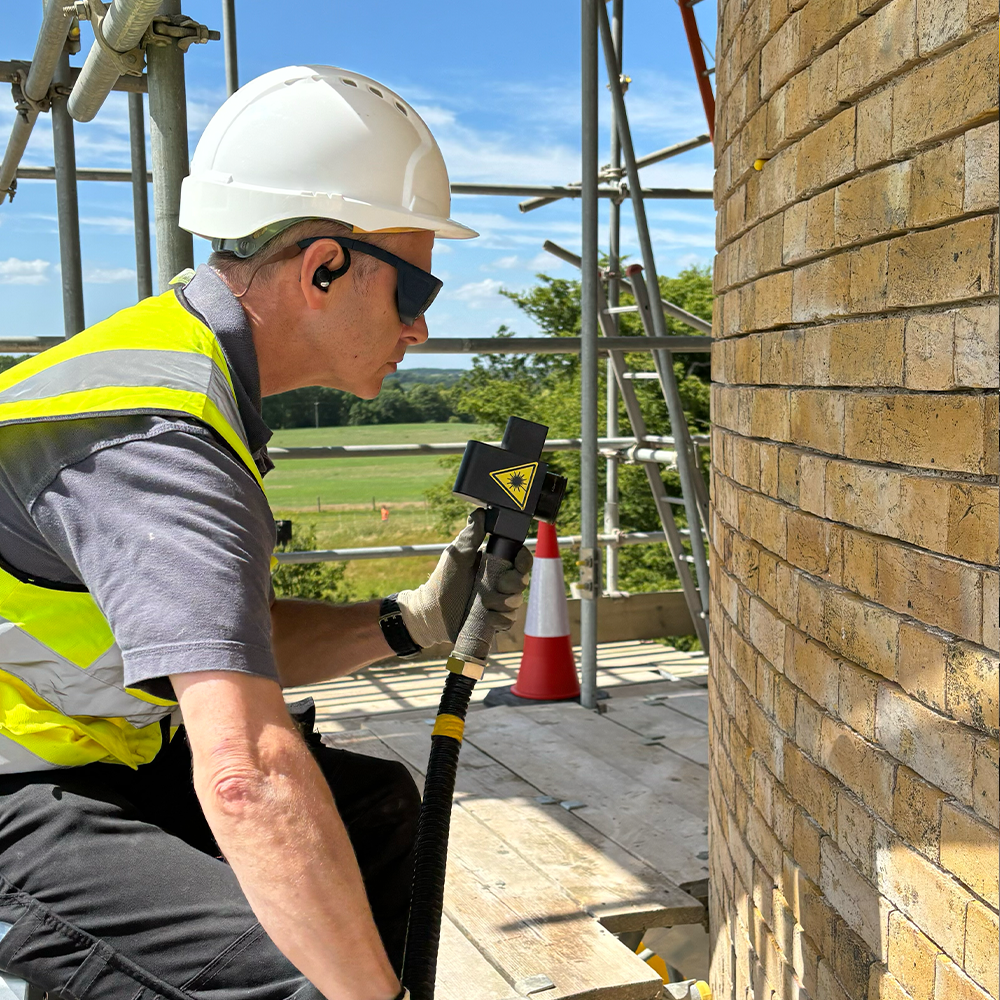
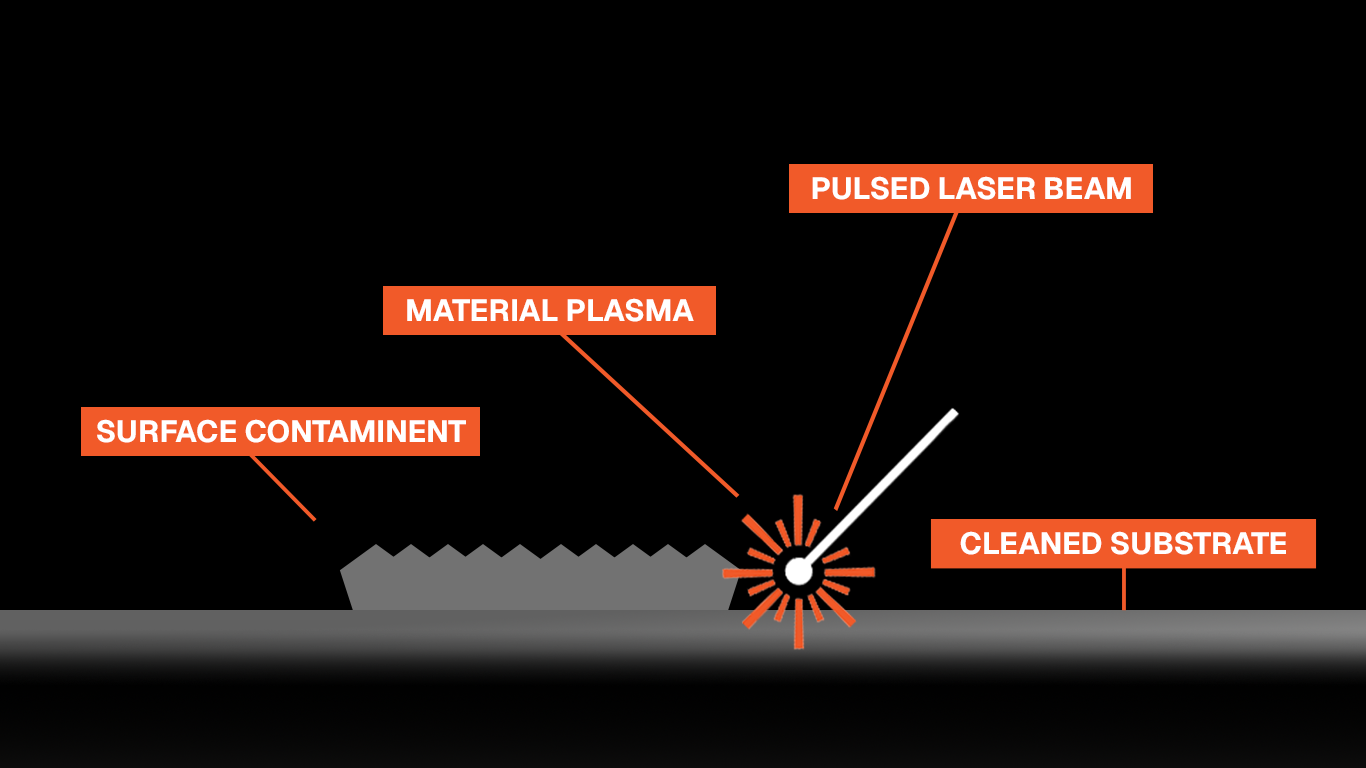
The laser energy is absorbed by the contaminant, causing it to undergo a phase change directly from a solid to a vapour, bypassing the liquid phase.
The contaminant layer has a different evaporation temperature than the underlying base layer, therefore as we carefully select our laser parameters, we can let the top contaminant layer evaporate, without damaging the underlying layer.
In addition to the contaminant absorbing this laser energy, the laser beam also goes through the contaminant and gets reflected on the underlying material, as a result of this reflection, the underlying layer doesn’t heat up as much, and at the same time the contaminant is also energised from below, resulting in an overall increase in energy absorption.
Our laser cleaning machines use a laser beam that pulsates, instead of using a continuous beam like we do with laser cutting. This pulsing concentrates the power even more and gives an even quicker heating of the contaminated layer, so as a result, we are able to clean big surfaces in a short period of time.
The advantage of using a pulsed laser is that we are able to finely control the power and duration of each laser beam pulse, which means it is much harder to overheat the base material as the nanosecond pulses provide time for the heat to disperse whilst focusing its energy where its needed... on the contaminant. Meaning we get a more powerful and highly tuneable laser beam, without the high risk of damaging the material.
By experimenting with certain Laser settings, such as the power, frequency, pulse duration and scan settings, we are able to find an optimal setting for the removal of almost any kind of rust, oxidation, paint, coating, etc. on most metals, stone, wood and even some plastics.